

The reed box shows a number between 1 and 5 — and anyone who just unpacked their first saxophone runs into the same question fast: which reed strength is right for a beginner? With Vandoren, the maker's best-selling reed worldwide, a second question usually follows: strength 2 or 2.5 to start?
This guide answers both in a few minutes: the strength logic, the difference between a classical and a jazz cut using Vandoren Traditional and Java as examples, and how proper care makes a reed last longer. No alto saxophone yet? A typical beginner model such as the Yamaha YAS-280 Altsaxophon in Es – Gelbmessing-Korpus, goldlackiert (zweiteiliger Becher, Mundstück 4C & Leichtkoffer inkl.) ships with a standard mouthpiece, and the strengths recommended here apply directly to it.
01Which strength is right to start with?
With most makers, reed strengths run from 1 (very soft) to 5 (very hard), usually in half steps such as 2, 2½, 3. The softer the reed, the less air pressure and embouchure strength it takes to respond — but a reed that's too soft sounds thin and squeaks easily, while one that's too hard barely vibrates for a beginner.
For most beginners on alto or tenor saxophone, strength 2 is the right starting point. After a few weeks of regular practice, once the embouchure has firmed up, many players move to 2½ — the tone gets fuller and easier to control.
One thing worth knowing about Vandoren specifically: reed strengths aren't standardised across brands. A Vandoren reed plays noticeably harder than a same-numbered reed from another brand — a Vandoren 2 feels closer to a 2½ from some other makers. If the supply list says "Vandoren 2 or 2.5", strength 2 is the safer choice for a true beginner; 2.5 suits a child who already has some experience on a wind instrument, such as recorder.
To start: Vandoren Classic Altsaxblatt 10er Pack verschiedene Stärken for alto saxophone and Vandoren Classic Tenor Saxophonblatt verschiedene Stärken 5er Pack for tenor saxophone — both come in packs of 5 or 10 with several strengths included, so the right fit can be compared directly.


| Strength | Suits |
|---|---|
| 1.5 | Very first notes, very soft embouchure |
| 2 | The usual starting point for most beginners |
| 2.5 | After a few weeks of practice, or with prior wind-instrument experience |
| 3 | More advanced students with a settled embouchure |
02Classical or jazz cut: Traditional or Java?
Beyond strength, there's a second variable: the cut. The two best-selling Vandoren lines make a good example of the difference.
Vandoren Classic Altsaxblatt 10er Pack verschiedene Stärken — also called "Classic" or "Traditional" — has a very fine tip and a thick heart. That produces a pure, dark tone that's even across the whole range, with a precise attack — the standard choice for music school and classical training, and widely regarded as the world's most-played saxophone reed.
Vandoren Java Alt Saxophonblatt 10er Pack verschiedene Stärken has a thicker tip and vibrates over a larger surface. That makes the tone brighter and noticeably easier to get going — Java was originally developed for jazz and pop, but it's also a solid beginner alternative if a strength-2 Traditional still feels too stiff.
The same logic applies to tenor saxophone: Vandoren Classic Tenor Saxophonblatt verschiedene Stärken 5er Pack for the classical route, Vandoren Java Tenor Saxophonblatt verschiedene Stärken 5er Pack for a somewhat easier start.


03Care and rotation: making a reed last
Soak a new reed in clean water for about 20 to 30 seconds before playing — not in the mouth, which dries out the fibres unevenly. After playing, let it air-dry flat before putting it back in its case.
Practising with three or four reeds in rotation from the start, instead of playing one reed until it wears out, gives the cane fibres time to recover between sessions and keeps the reed stable for longer. A reed is due for retirement once the tone turns dull, gets harder to control, or shows a hairline crack near the tip — with regular practice, that's usually after a few weeks.
04Browse the category
To filter directly by strength and cut: the Altsaxophon - Blätter category gathers all alto saxophone reeds, Tenorsaxophon - Blätter the matching selection for tenor saxophone.
Strength is the most important decision — for most beginners on alto or tenor, 2 is the right start, with Vandoren as the reference point. The cut (Traditional for a classical tone, Java for a brighter, easier one) can be tried afterwards at leisure, ideally while keeping several reeds in rotation.
Frequently asked questions
What reed strength does a beginner need for alto saxophone?
Vandoren 2 or 2.5 — what's the difference for a beginner?
What's the difference between Vandoren Traditional and Java?
How long does a saxophone reed last?
Do the same reeds fit alto and tenor saxophone?
Find the right saxophone reeds
Pick the strength, try the cut, play in rotation — for a tone that holds up from day one.
Browse alto saxophone reedsBrowse tenor saxophone reedsPassende Produkte
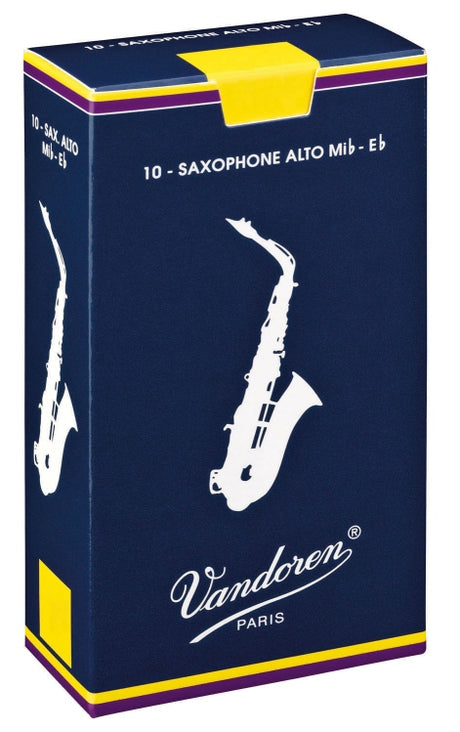
Vandoren Classic Alto Saxophone Reeds Pack of 10 Various Strengths
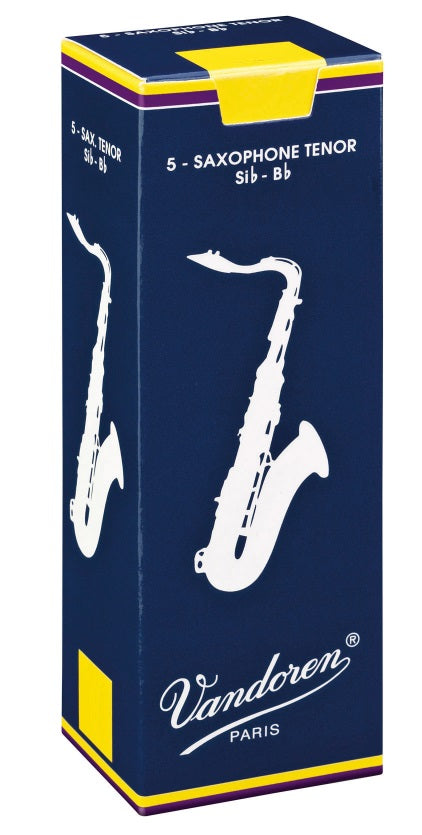
Vandoren Classic Tenor Saxophone Reeds Various Strengths Pack of 5
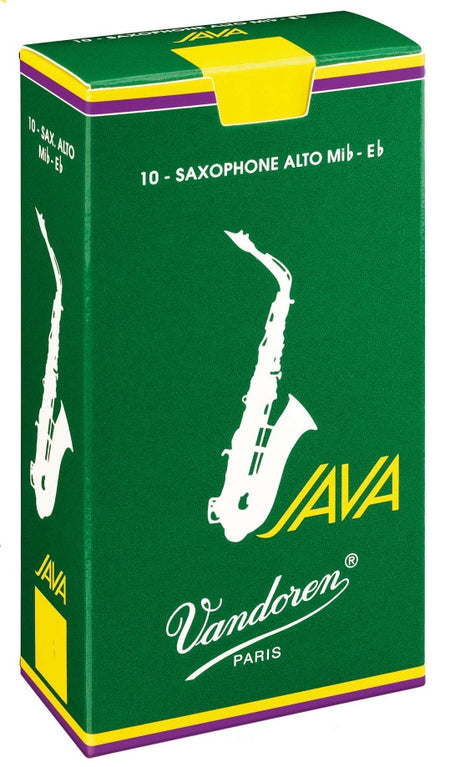
Vandoren Java Alto Saxophone Reeds 10-pack various strengths
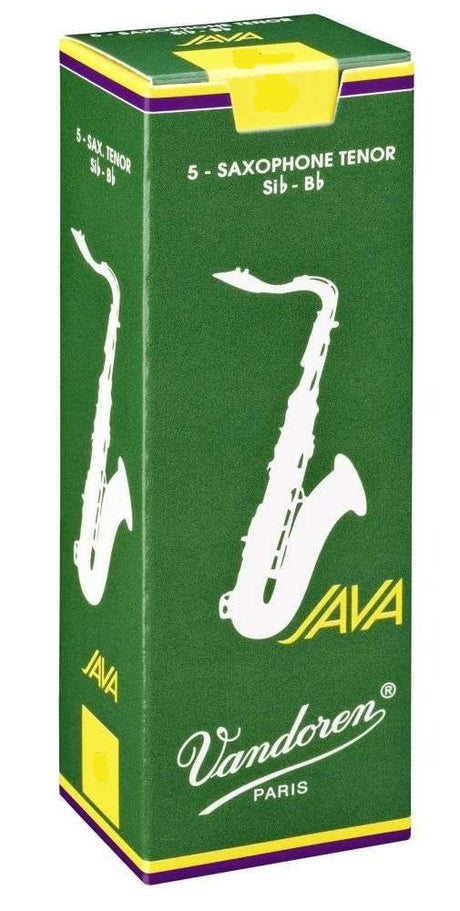
Vandoren Java Tenor Saxophone Reeds Various Strengths Pack of 5