

Choosing a first concert flute raises several setup questions: covered or open-hole keys, offset G and the E mechanism. Start with the requirements from your lessons, then compare specific models. This is a general selection guide; the historical YFL-211/YFL-212 comparison is covered separately.
01Start with lessons and handling
Ask first whether your teacher or ensemble requires a particular setup. Then consider practical handling: reaching the keys, holding position and covering the holes on an open-hole flute. These are individual selection questions, not rules based on age or body size. Yamaha lists the YFL-212 as a standard 200 Series model with covered keys and offset G. The YFL-272 adds open-hole keys and also has offset G. These two configurations give you concrete points of comparison without creating a general ranking.
02Covered keys or open-hole keys?
With a covered key, a pad covers the tone hole when the key is closed. Yamaha says this can help when a player does not always press the centre of the key accurately. Open-hole keys leave the hole exposed; this is part of the YFL-272 configuration. Yamaha explains that open keys give direct contact with the hole and are preferred by many advanced players. They are not a requirement for every beginner. Check whether your teacher or learning material expects open holes and whether your fingers can cover them comfortably. Compare the actual model instead of treating either key style as universally better.
03Put offset G, split E and the headjoint in context
Offset G describes the arrangement of the G key. Yamaha says many players find this setup natural, but the right feel is personal. The YFL-212, YFL-272 and YFL-312 are all listed with offset G and a split E mechanism. Yamaha says split E helps the high E speak with more stable, centred intonation, so it does not distinguish these three models. A curved headjoint is listed as an option for certain 212 models. That does not mean every headjoint fits every flute body. This guide compares the selected standard models and makes no compatibility promise for other variants.
04Compare the YFL-212, YFL-272 and YFL-312
All three models include the split E mechanism, so it does not distinguish them. The YFL-212 and YFL-312 have covered keys and offset G. The YFL-272 has open-hole keys and also uses offset G. The 212 is in the 200 Series; the 312 is in the 300 Series. Yamaha lists a sterling silver lip plate on the YFL-312. The useful differences for choosing are: Follow your teacher’s required key type first. If there is no specific requirement, use covered versus open-hole keys as the main choice; the YFL-312 lip plate is another model difference. The button at the end of the article opens the concert flute collection. When comparing materials, check which part the description refers to. Yamaha lists a sterling silver lip plate for the YFL-312; this does not describe the whole flute body or establish a general quality ranking.
| Model | Keys and mechanism | When this setup may fit |
|---|---|---|
| YFL-212 | Covered keys, offset G, split E | When covered keys are required |
| YFL-272 | Open-hole keys, offset G, split E | When open-hole keys are expected |
| YFL-312 | Covered keys, offset G, split E; sterling silver lip plate | When this lip plate material matters |
Check lesson requirements and handling first, then compare key styles and mechanisms. The YFL-212, YFL-272 and YFL-312 have different setups; choose around your actual playing needs.
Frequently asked questions
Are covered keys better for beginners?
What does offset G mean?
What does a split E mechanism do?
Is this the YFL-211/YFL-212 comparison?
Browse current concert flutes
Compare the available Yamaha models and their features.
Browse all concert flutesView Yamaha YFL-212View Yamaha YFL-272View Yamaha YFL-312Passende Produkte
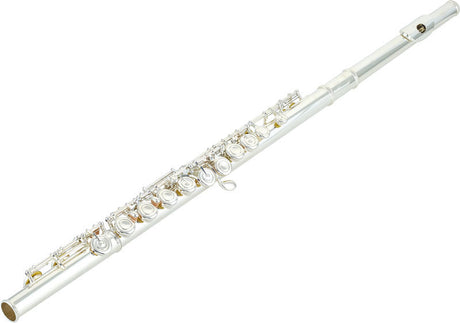
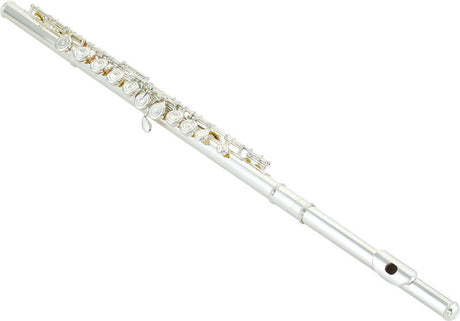
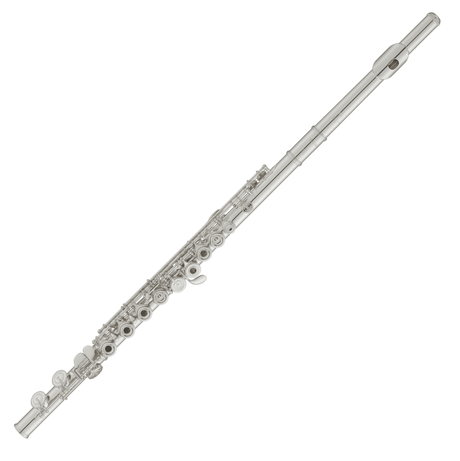
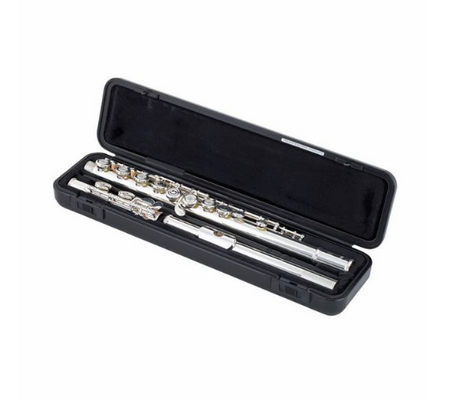
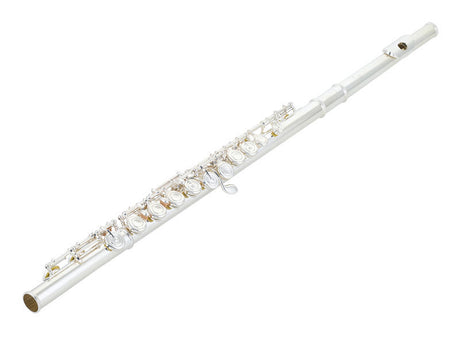

Yamaha YFL-312 flute – step-up model with sterling silver headjoint, split-E mechanism & offset G