

Dull, stretched out or broken strings cost tone and tuning stability. Changing ukulele strings takes about fifteen calm minutes and is well within reach for beginners. This guide walks you through it step by step, from choosing the right set to tying the bridge knot to the break-in phase.
One thing up front: ukulele strings are size specific. A soprano, concert and tenor set is a separate set each, even though the standard G-C-E-A tuning is the same for all three. Baritone (D-G-B-E) and bass have their own sets. So reach for the set that matches your body size.
01Choosing the Right Set
First the right set. Soprano, concert and tenor are classically tuned re-entrant in G-C-E-A (high G string), and each size has its own length-matched set. Baritone is tuned lower in D-G-B-E and needs its own set, a baritone set is available on request. If you prefer a linear tenor, reach for a Low-G set.
Material decides the tone you want: Aquila Nylgut is the warm, traditional near-standard and stays in tune well. Fluorocarbon sounds brighter and more precise at a thinner gauge. Our guides on choosing strings and on materials go deeper. You will find an overview of all sets in the Ukulelen - Saiten category.


02Tools and Preparation
You do not need much. A tuner (clip-on or app) is essential, and a small wire cutter helps trim the string ends cleanly. Change the strings one at a time rather than all at once, so neck tension stays even and you do not lose track of the order.
Lay out the new string and check its position. From the high A string to the G string, each string has a fixed position.
03Removing the Old Strings
First relax the string by turning the tuner until it is loose. That keeps a tensioned string from snapping back. Then unwind it from the tuner and undo the knot at the bridge.
Most ukuleles have a tie-bar bridge, where the string threads through the bridge and is knotted. Some models use bridge pins instead, fixing the string with a pin. Check which bridge type yours has before pulling out the old string.
04Tying at the Bridge
On a tie-bar bridge, thread the string from the front through the hole in the bridge so a short end sticks out the back. Fold that short end back over the bridge and pass it under itself once or twice to form a loop. For thin fluorocarbon strings, make two loops so the knot does not slip.
Pull the knot tight before adding tension. It should sit behind the bridge edge, not on top of the bridge. On a ukulele with bridge pins, push the string end with the pin into the hole and pull the string lightly until the pin holds.
05Winding onto the Tuners
Thread the free end through the hole in the tuner post and leave some slack so you can wind three to four turns. Wind so the string lays downward toward the headstock on the post. After a few turns the windings press against the threaded end and clamp it in place.
Now slowly bring the string up to roughly pitch. Trim the excess ends with the wire cutter, leaving a few millimeters.

06Breaking In and Retuning
New strings stretch over several days and go noticeably out of tune at first. That is normal, not a fault. Tune the ukulele to G-C-E-A with the tuner and gently pull each string a few millimeters away from the fretboard to speed up the stretch.
Then tune again and repeat play and retune over the next few days. After a short break-in the ukulele holds tune and the fresh set shows its full tone.
A string change becomes routine once you have done it. With the right set, a clean knot and a little patience during break-in, your ukulele sounds fresh again and holds its tuning.
Frequently asked questions
How often should I change ukulele strings?
Can I put tenor strings on a concert ukulele?
Why does my ukulele keep going out of tune after a change?
Which material should I pick?
Do I need special tools?
Find the Right Set
From warm Nylgut to bright fluorocarbon, our category has the right set for your size.
All Ukulele StringsAquila Concert SetPassende Produkte
Aquila ukulele string set 7U concert


Martin M600 Fluorocarbon Ukulele Strings Soprano/Concert
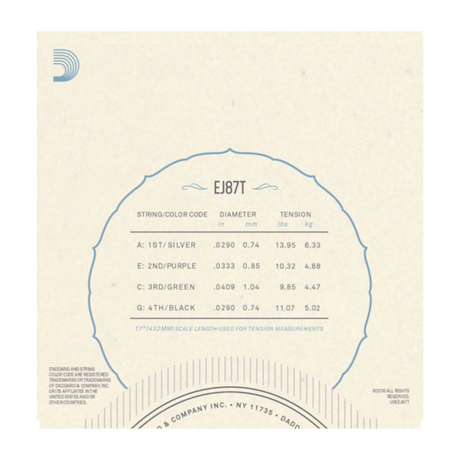
D'Addario EJ87T Titanium Ukulele String Set, Tenor