

While you play, the saxophone hangs almost entirely on the strap, and that is exactly where comfort is decided after an hour of practice. The right saxophone strap depends on the weight of your instrument and how long you play.
This guide sorts out the three common designs, clarifies the question of snap hooks and clasps, and gives a clear direction for alto, tenor and baritone.
Comfort at the neck, light weight
Ideal for: Alto and lighter tenor saxophones, rehearsals and medium sets
See all Saxophon - Zubehör →Weight carried on shoulders and back instead of the neck
Ideal for: Heavy tenor and baritone saxophones, long sessions, sensitive neck
See all Saxophon - Zubehör →01The three designs at a glance
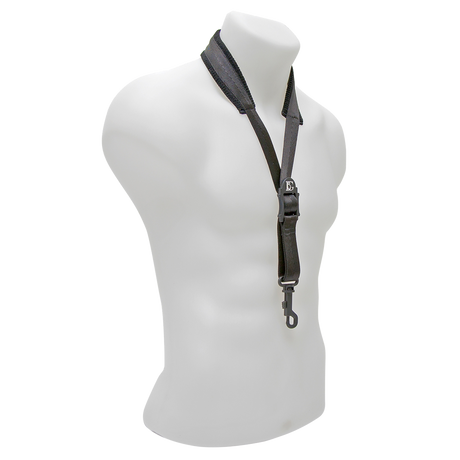
The classic neck strap is the simplest and most affordable option. A band runs around the neck and the hook carries the instrument. This works well for light saxophones and short playing times, but places the entire load on one narrow spot at the neck.
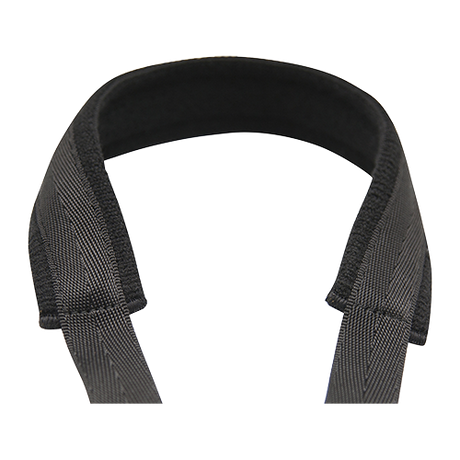
The padded comfort strap works on the same principle but spreads the pressure noticeably better through a wider, padded neck pad. For many players this is the sensible standard.
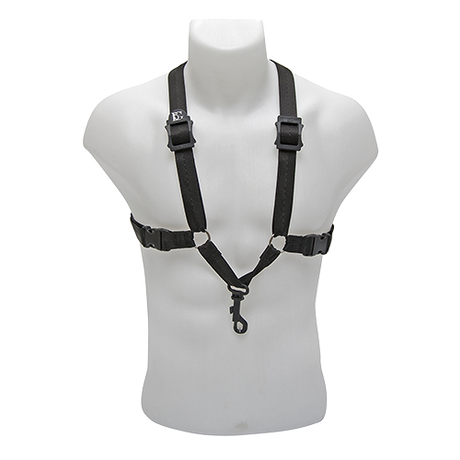
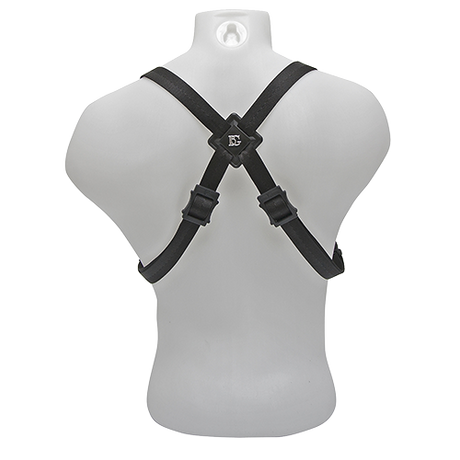
The harness, also called a cross strap or shoulder harness, runs the straps over both shoulders and the back. The weight no longer hangs on the neck but is spread across the upper body. This is the choice when the instrument is heavy or long sessions are ahead.


02Which strap for alto, tenor or baritone?
The weight of the instrument is the most important factor. An alto saxophone is comparatively light, so a padded neck strap is enough in most cases. With the tenor saxophone the difference becomes clearer, a well padded strap or a harness gives more relief over time. For the baritone saxophone, the heaviest of the common saxophones, a harness is usually the most sensible solution.
Anyone who plays long stretches throughout the day or wants to spare the neck reaches for a harness sooner, regardless of the instrument.


| Instrument | Weight | Sensible choice |
|---|---|---|
| Alto saxophone | light | padded neck strap |
| Tenor saxophone | medium | padded strap or harness |
| Baritone saxophone | heavy | harness |
| long sessions, any instrument | sustained load | harness |
03Snap hooks, clasps and adjustability
At the lower end sits the clasp that fits into the ring of the saxophone. A simple open hook clips on quickly, while a metal snap hook or swivel clasp sits more securely and does not come loose by accident. Models with a plastic clasp are light and gentle on the lacquer, while quality metal clasps last longer.
Look for a smooth, stable length adjustment. It decides whether the mouthpiece reaches the mouth without contortion and should not slip under load.
In short: a light alto and short sets are well served by a padded neck strap, while heavy tenors and baritones or long sessions are noticeably more comfortable with a harness. If you are still looking for your next instrument, our saxophone buying guide helps you choose.
Frequently asked questions
Do I really need a harness for an alto saxophone?
What is the difference between a neck strap and a harness?
Does one strap fit every saxophone?
Metal or plastic clasp, which is better?
Find the right strap
Browse our selection of saxophone straps, from the simple neck strap to the harness.
View saxophone accessoriesBG harnessPassende Produkte
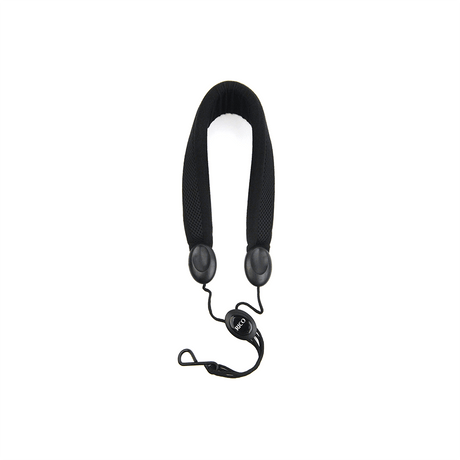
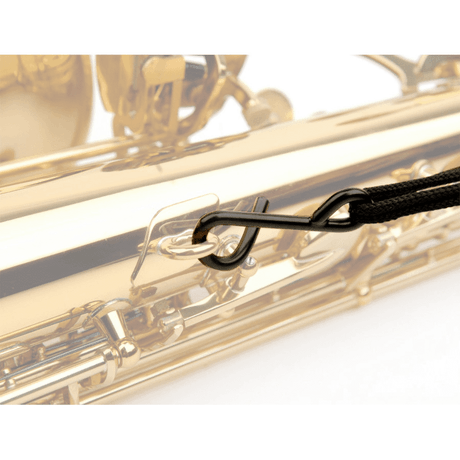
Rico saxophone strap tenor/baritone SLA18
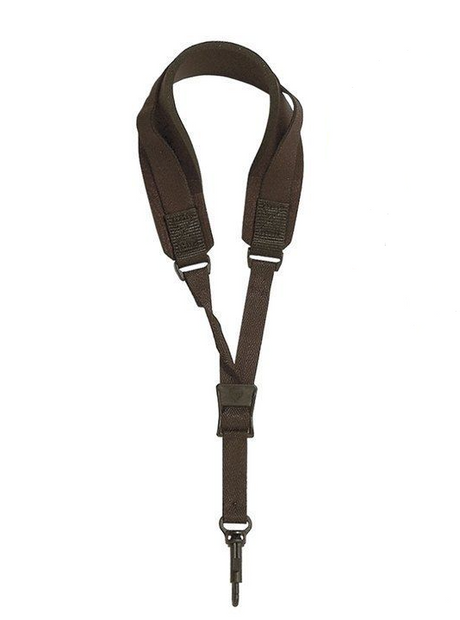
Neotech Saxophone Strap Wick-It XL, Length 52.1 - 66cm