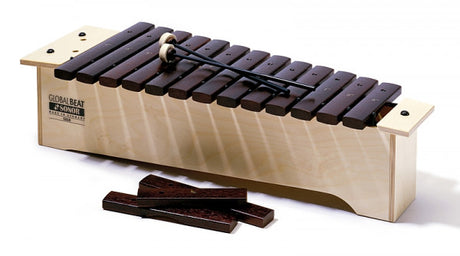
If you are looking for a glockenspiel, metallophone or xylophone for children, the same question comes up quickly: what is the actual difference, and which barred instrument fits which age and setting? All three belong to the Orff instrumentarium, the classic set for music education. They look similar, but they sound very different.
This guide explains the differences in sound, range and construction, shows what diatonic and chromatic mean, and gives a clear recommendation for preschool, primary school, early-years music and playing at home.
01Glockenspiel, metallophone, xylophone: the sound is the difference
All three are barred instruments: tuned bars sit side by side on a resonating box and are struck with mallets. The key difference is the bar material, and with it the sound.
The glockenspiel has metal bars and sounds bright, bell-like and very high. It is the smallest and lightest of the three, making it the affordable entry point for small hands. The metallophone also has metal bars, but larger and heavier. It sounds lower, fuller and has a long, floating sustain. The xylophone has wooden bars and sounds warm, dry and percussive, with the note fading quickly. These three timbres complement each other in an ensemble, which is why Orff teaching often uses all three together.
02The glockenspiel: a bright start for small hands
For most children, the glockenspiel is the first barred instrument. It is compact, robust and the most accessible entry point. The bright sound carries well and motivates, and simple melodies come together quickly.
It comes in two ranges: soprano (high and bright) and alto (an octave lower, a little rounder). For preschool and the very first contact, the soprano glockenspiel is the usual choice. Sonor - GS Kinder Glockenspiel is a robust starter model, while Sonor GP Sopran Glockenspiel Primary from the Orff-Schulwerk line already features removable bars.


03Metallophone and xylophone: depth and warmth for the ensemble
As soon as children play together, the metallophone and xylophone come in. With its long sustain, the metallophone lays down the sustained, resonant base, while the xylophone marks the rhythmic accents with its dry wooden tone. In primary school and early-years music, glockenspiel, metallophone and xylophone together form a small orchestra.
Both come in soprano, alto and bass ranges. Models such as the Sonor MS GB Sopran Metallophon and the Sonor SX GB Sopran Xylophon belong to Sonor's Orff-Schulwerk series with removable bars, the design Carl Orff had developed for the classroom.
04Diatonic or chromatic, and what are removable bars?
Diatonic instruments only have the natural notes, that is the white piano keys (C major scale). That is more than enough for children's songs and for getting started. Chromatic instruments add the semitones (black keys) and allow any key. On many Orff models the semitones are added as plug-in bars, turning a diatonic instrument into a chromatic one.
The second Orff principle is the removable bars. You can take off individual bars so that only the notes needed for a song remain. Children then cannot play a wrong note, a core idea of the Orff approach.
| Glockenspiel | Metallophone | Xylophone | |
|---|---|---|---|
| Bars | metal (small) | metal (large) | wood |
| Sound | bright, bell-like, high | low, full, long sustain | warm, dry, percussive |
| Sustain | medium | long | short |
| Ranges | soprano, alto | soprano, alto, bass | soprano, alto, bass |
| Suitable from | preschool / age 3-4 | primary school | primary school |
| Entry price | affordable | mid | mid |
05Which barred instrument for whom?
For preschool, early-years music and first steps at home, the soprano glockenspiel is the right choice: small, robust, affordable and immediately rewarding. For primary school, the step up to an ensemble of glockenspiel, metallophone and xylophone pays off, because the three timbres complement each other and group playing becomes possible.
Those planning for the long term, for example a music school or a well-equipped classroom, choose models with removable bars and the option to add chromatic semitones. That way the instrument grows with the child. The full selection is in the Orff.
In short: the glockenspiel for a bright, affordable start, the metallophone for a low, resonant foundation, the xylophone for a warm, percussive accent. For first contact a diatonic soprano glockenspiel is enough; for an ensemble the trio of all three barred instruments is worth it.
Frequently asked questions
What is the difference between a glockenspiel, metallophone and xylophone?
Which Orff instrument is best for preschool children?
What do diatonic and chromatic mean for barred instruments?
What are removable bars good for?
Which ranges do the metallophone and xylophone come in?
Find the right Orff barred instrument
Glockenspiels, metallophones and xylophones by Sonor in Orff-Schulwerk quality, for preschool, school and home.
Browse Orff instrumentsSoprano glockenspiel for beginnersPassende Produkte
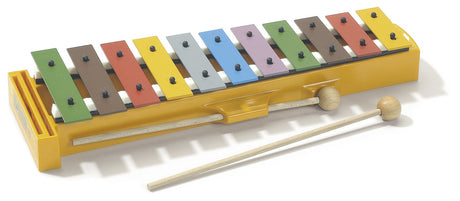
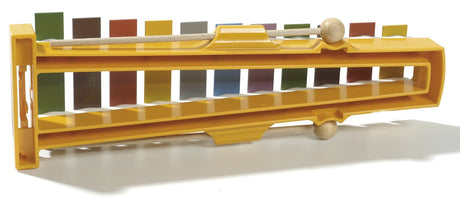
Sonor - GS children's glockenspiel
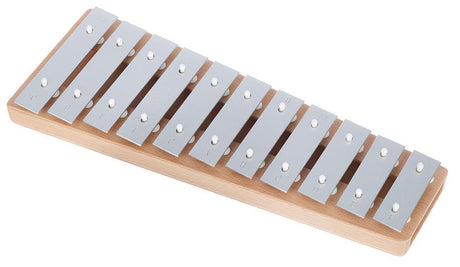
Sonor GP Soprano Glockenspiel Primary
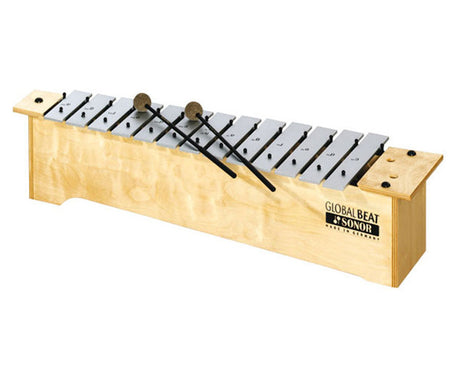
Sonor MS GB Soprano Metallophone