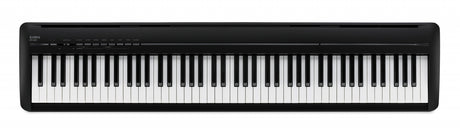
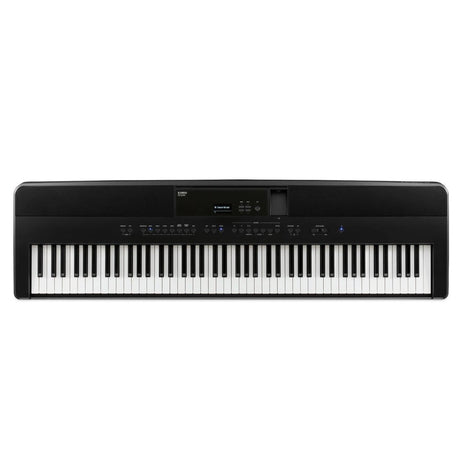
If you want a portable digital piano that works just as well at home as on stage, Kawai quickly points you to two siblings from the same line: the ES-120 and the ES-520. Both share a compact build and a portable purpose, but there is a deliberate gap between the entry model and the step up. This comparison of the Kawai ES-520 and ES-120 sorts the differences so you know which model fits your playing.
The short answer first: the ES-120 is the well-judged entry point, the ES-520 the more capable instrument with a finer action, stronger sound and more features. The sections below explain who the extra spend pays off for.

The compact entry point
Ideal for: Beginners and home players who want a light, honest hammer-action piano at a fair price.
See all Stage Pianos →The step up
Ideal for: Advanced and stage players who want a finer action, more voices and stronger speakers.
See all Stage Pianos →01The action: RHC versus RHC II
The most noticeable difference sits under your fingers. The Kawai Stagepiano ES 120 uses the Responsive Hammer Compact action (RHC): fully weighted, with graded touch across the keyboard, compact and light. That is enough for clean practice and an authentic feel day to day.
The Kawai Stage Piano ES 520 steps up to the improved RHC II action with finer sensing. Repetitions and touch nuances are tracked more precisely, which benefits advanced players who work a lot with dynamics.
02Sound and speakers
Both models carry Kawai concert grand samples, but the playback differs clearly. The ES-120 has a speaker system of around 20 watts, plenty for a living room and small spaces.
The ES-520 doubles the output to around 40 watts and adds extra voices along with an expanded sound engine. In larger rooms, at rehearsal or on a small stage it carries audibly further and sounds fuller.
| Feature | ES-120 | ES-520 |
|---|---|---|
| Positioning | entry | step up |
| Action | RHC | RHC II (finer sensing) |
| Speakers | approx. 20 watts | approx. 40 watts |
| Sound variety | core voices | expanded selection |
| Recording | basic | expanded |
| Build | compact, portable | compact, portable |
03Connections, controls and recording
For stage and studio use the interfaces matter. Both pianos connect over Bluetooth and through classic ports, but the ES-520 offers a wider feature set for controls and recording. If you want to capture ideas in multitrack or move through sounds and settings more easily, the ES-520 is the more comfortable tool.
The ES-120 stays deliberately lean and focused on the essentials, which makes it especially beginner friendly.
04Portability and the price gap
Both instruments are light enough to carry and so fit the portable concept of the ES line. The price gap marks the step from entry to the more capable model.
The rule of thumb: if you mostly practice at home and want an honest, weighted piano, the ES-120 is the coherent choice. If you perform regularly, play in larger rooms or value a finer action and more voices, the ES-520 earns its premium. You will find more portable models in the overview of Stage Pianos.


Both Kawai stage pianos are an honest choice in their respective class. The ES-120 wins over beginners with a weighted action at a fair price, the ES-520 rewards advanced players with a finer action, stronger sound and more features. What matters is how and where you play.
Frequently asked questions
What is the clearest difference between Kawai ES-120 and ES-520?
Is the ES-120 suitable for beginners?
Is the step up to the ES-520 worth it?
Are both pianos portable?
Which model has the better recording function?
Find the right portable stage piano
Compare both Kawai models and the wider selection at your own pace.
View all stage pianosDiscover the Kawai ES-520Passende Produkte