

This guide covers string changes on steel-string acoustics with bridge pins and classical guitars with tie-block bridges. Use only the string type specified for your guitar, and fully loosen each string before removing or cutting it.
| Step | Steel-string acoustic with bridge pins | Classical guitar with tie-block bridge |
|---|---|---|
| Prepare | Correct steel-string set; fully loosen string | Correct nylon set; fully loosen string |
| Anchor | Ball end against the underside of the bridge plate; thumb pressure only | Secure at tie block; add a loop if a treble string slips |
| Finish | Raise tension gradually, check the fit, then tune | Raise tension gradually, check the knot, then tune |
01Start with the guitar type
Steel-string acoustics and classical guitars use different string sets and bridge fittings. First check the guitar maker’s instructions and the string package. A ball-end string belongs on a bridge-pin system; classical strings are tied at the bridge. The steps below cover both setups.
02Prepare the strings and work area
Prepare the correct set, a tuner and wire cutters; a string winder is optional. Protect the top from tools and sharp ends. Replace one string at a time. Fully loosen a string before removing or cutting it. If a pin sticks, use a suitable tool and do not lever against the guitar top.
03Identify the bridge type
On a steel-string acoustic guitar, a bridge pin usually holds the string ball in the bridge hole. On a classical guitar with nylon strings, the string end is tied at the bridge. Check the instrument and string pack to confirm the correct set. The two attachment methods require different steps.
04Restring step by step
Steel-string acoustic with bridge pins: 1. Slowly loosen one string at the tuning machine until slack. Unwind it and remove it from the post. Pull the bridge pin with a suitable pin puller; do not lever a knife or screwdriver against the top. 2. Put the new steel string’s ball end into the bridge hole. Insert the pin, aligning the string with its slot if the pin has one. Press it in with your thumb; Martin warns against hammering bridge pins. 3. Gently pull the string toward the headstock while holding the pin. This seats the ball against the inside of the top. If the pin rises, release tension and reposition the ball and pin. 4. Feed the other end through the tuning post. Leave slack for a few neat wraps and keep light tension as you wind. Follow the guitar maker’s directions for locking and winding direction. 5. Tune gradually and check that the pin and ball remain seated. Repeat one string at a time.
Classical guitar with a tie-block bridge: 1. Fully loosen a nylon string and unwind it. Carefully remove its end from the bridge knot while protecting the top. 2. Pass the end through the bridge opening and form the loop around the tie block shown in the maker’s diagram. Pass the tail under the string. The exact loop depends on the string and bridge. 3. Pull both ends evenly. Yamaha says the final knot should sit over the edge of the bridge block. If it slips, do not increase tension; loosen the string and retie it using the instructions. 4. Feed the other end through the tuning post and wind it as the guitar manual directs. The path may differ for treble and bass strings. 5. Tune in stages and watch the knot. Repeat for each string one at a time. An extra loop can help if a smooth treble string slips. Follow the specific instructions for a double-hole bridge.
New strings may settle at first. Retune the full set after restringing and check the pins and knots. Do not tighten a slipping knot while the string is under high tension. If the bridge, pin or tuning machine looks damaged, stop and check the guitar maker’s instructions.
05Choose strings for your instrument
For a steel-string acoustic, choose a metal set labelled for that instrument. For a classical guitar, use compatible nylon strings at a suitable tension. The product links show one example of each type; the collection lists other options.
Identify the string and bridge type first. Replace one string at a time, raise tension gradually and check the anchor before tuning.
Frequently asked questions
Can I put steel strings on a classical guitar?
Should I remove all the strings at once?
How should the ball end sit under a bridge pin?
What if a treble string slips at a tie-block bridge?
Browse strings by guitar type
Compare steel strings for acoustics and nylon strings for classical guitars.
View the EJ15 acoustic setView the EJ27N classical setBrowse guitar stringsPassende Produkte

D'Addario Strings for Acoustic Guitar, Phosphor Bronze - 10/47
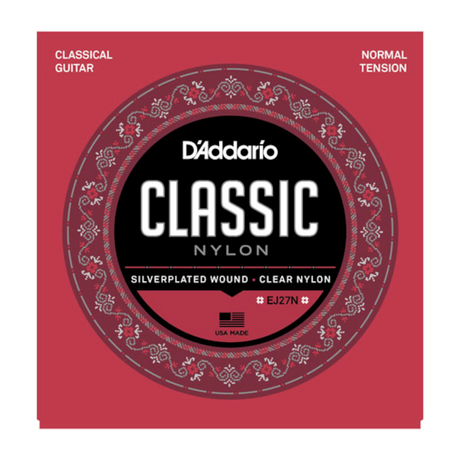
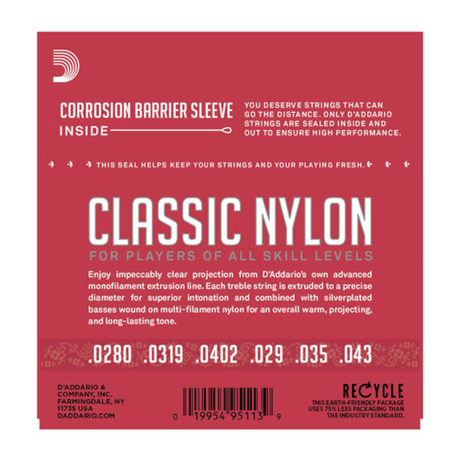
D‘Addario Classic Nylon EJ27N Student Strings for Classical Guitar, Nylon, Normal Tension
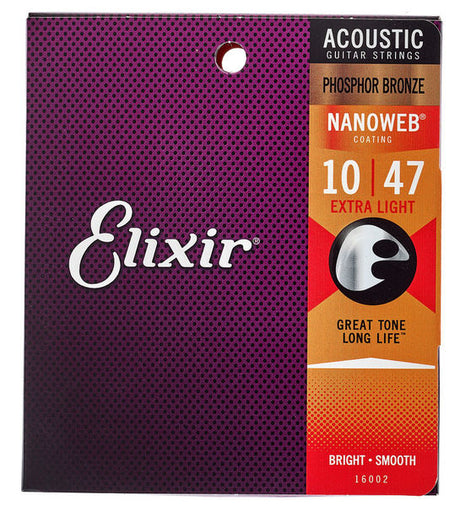

Elixir Nanoweb Phosphor Bronze Acoustic Guitar Strings - 10/47


D´Addario XS Phosphor Bronze - 0.10-0.47